Lower electric bills
Offset electricity you would otherwise buy while the sun is shining.
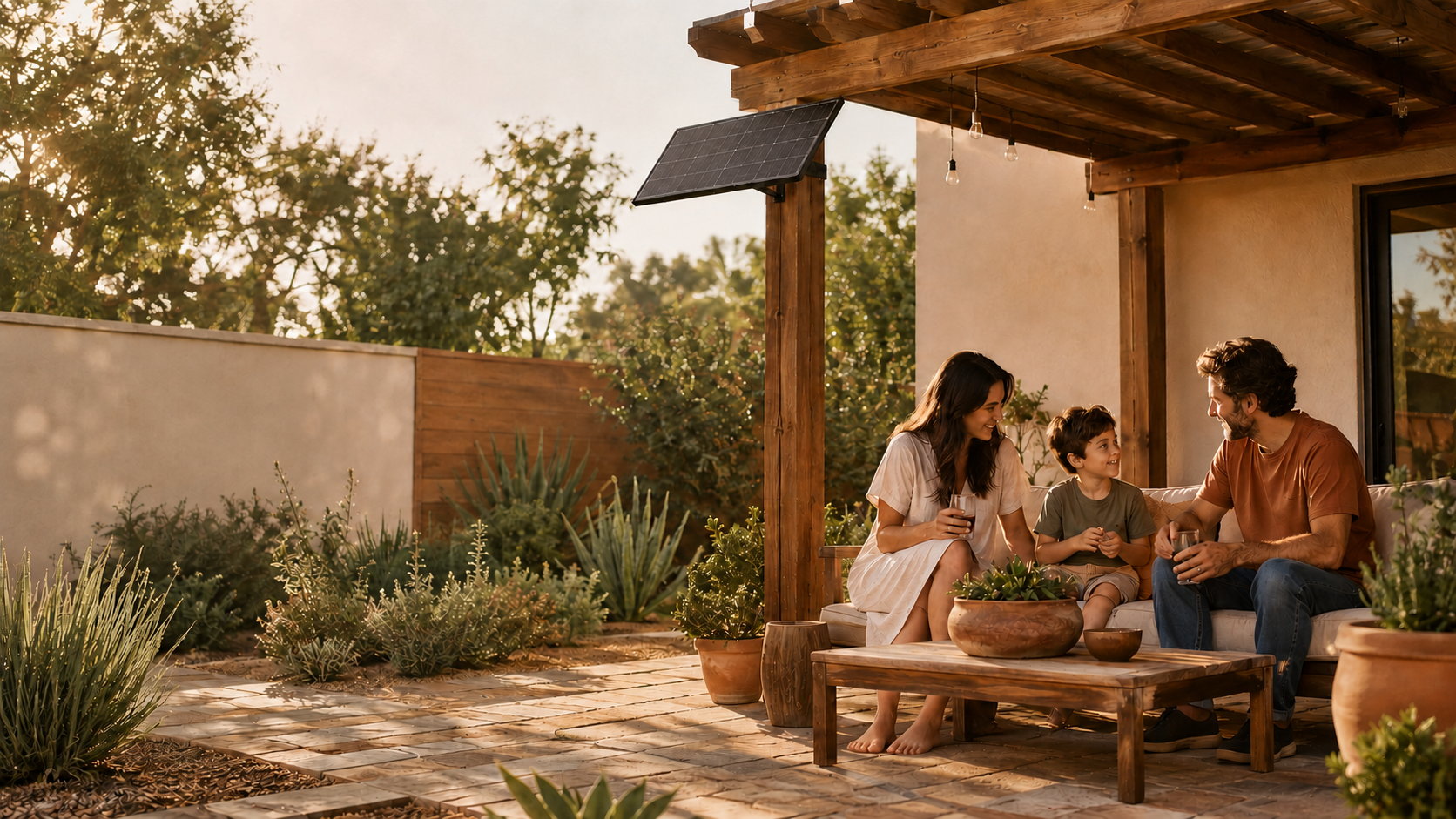
Small, safe plug-in solar could give Texans a lower-cost way to generate some of their own electricity—whether they own a house or rent an apartment.
Educational project • Texas policy pathway not yet clear
Representative examples only—not product quotes or promised performance.
A compact panel makes direct-current electricity. A certified microinverter converts it into the same kind of alternating-current power your home uses. Your home uses that solar first; the grid supplies whatever else you need.
Secure it in a sunny, suitable location.
Plug the solar panel cable into the microinverter.
Connect the kit to an approved home outlet.
Illustrative setup only. Use purpose-built equipment and follow current mounting, electrical, utility, building, landlord, and HOA requirements.
The system does not need to power the whole house. It simply reduces how much electricity the home buys from the grid while the sun is shining.
Designed for straightforward do-it-yourself setup. In places with a clear legal pathway, a homeowner can typically place or securely mount the panels and connect the purpose-built kit components without hiring a solar installation crew. Building, mounting, utility, and electrical rules still apply.
Offset electricity you would otherwise buy while the sun is shining.
Start with hundreds of dollars instead of a major rooftop project.
A future Texas framework could include balconies, patios, yards, renters, condos, and apartments.
Start small and modular instead of committing to an entire rooftop installation.
Small systems add up. Thousands of homes trimming a few hundred watts each can significantly reduce grid demand during hot, sunny periods.
Start with a few everyday assumptions. Every number stays visible and adjustable.
Plug-in solar saves less each year, but it starts much smaller. Rooftop results depend heavily on installed price, system size, financing, and how exported power is credited.
Rooftop example: 6 kW, south-facing, light shade, 40% used in the home, remaining production valued at the export credit above. Comparison is illustrative—not a quote.
Estimates only. Actual production varies with location, orientation, shading, equipment, weather, mounting, maintenance, and local rules. Electricity rates change. Savings are not guaranteed.
Think of 400 W as a contribution to whatever your home is already using—not a separate miniature electrical system for specific appliances.
* Based on estimated annual-average midday electricity demand for a Texas home. Actual demand varies by season, weather, air-conditioning use, home size, and occupancy.
Actual appliance use varies by model and operating cycle. These examples are for scale, not a promise that one panel continuously runs each item.
Panels need secure mounting, useful sun, and a safe approved connection. A future Texas pathway should make appropriate options clear for more kinds of homes.
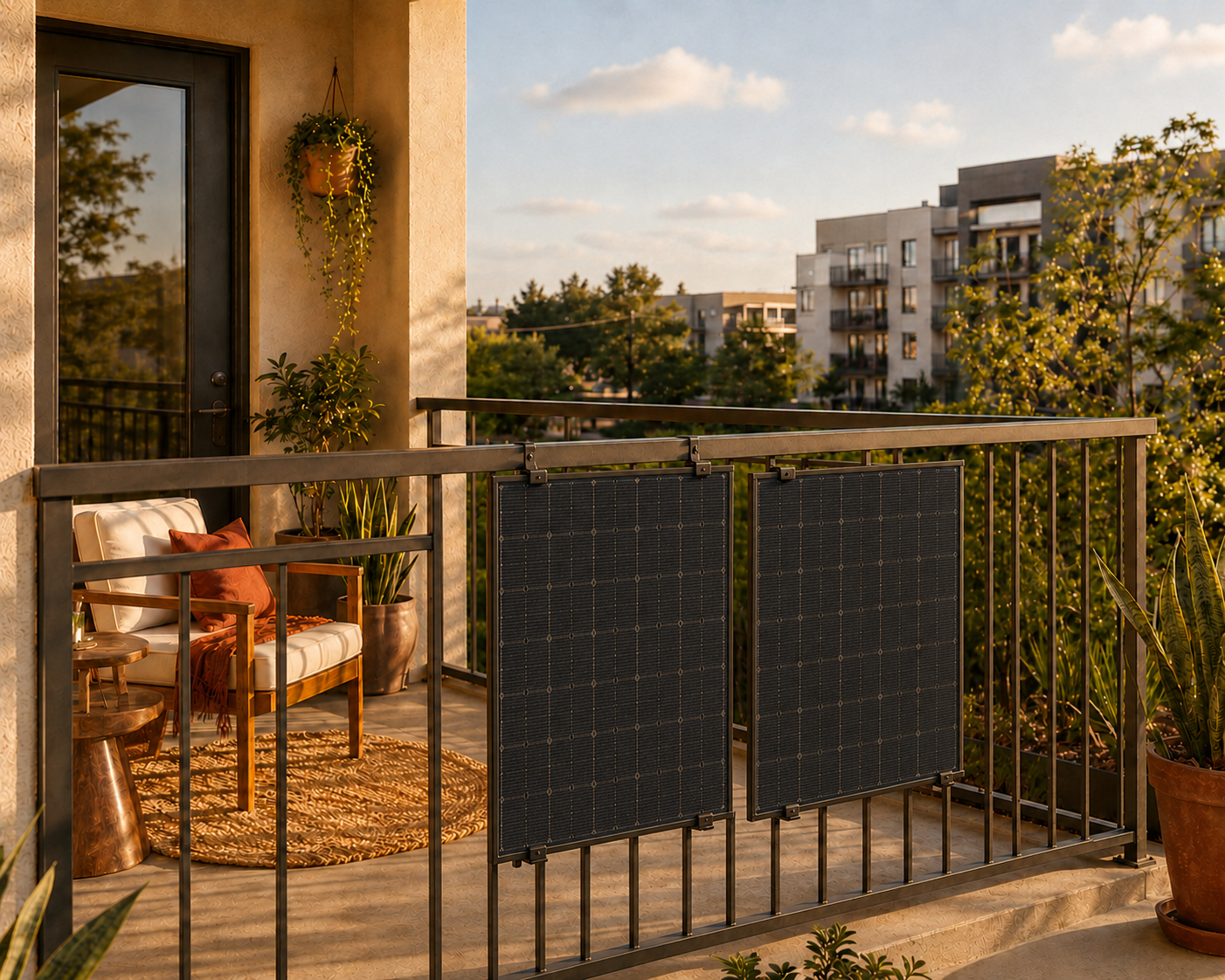
A compact option for apartments and condos—subject to building and landlord rules.
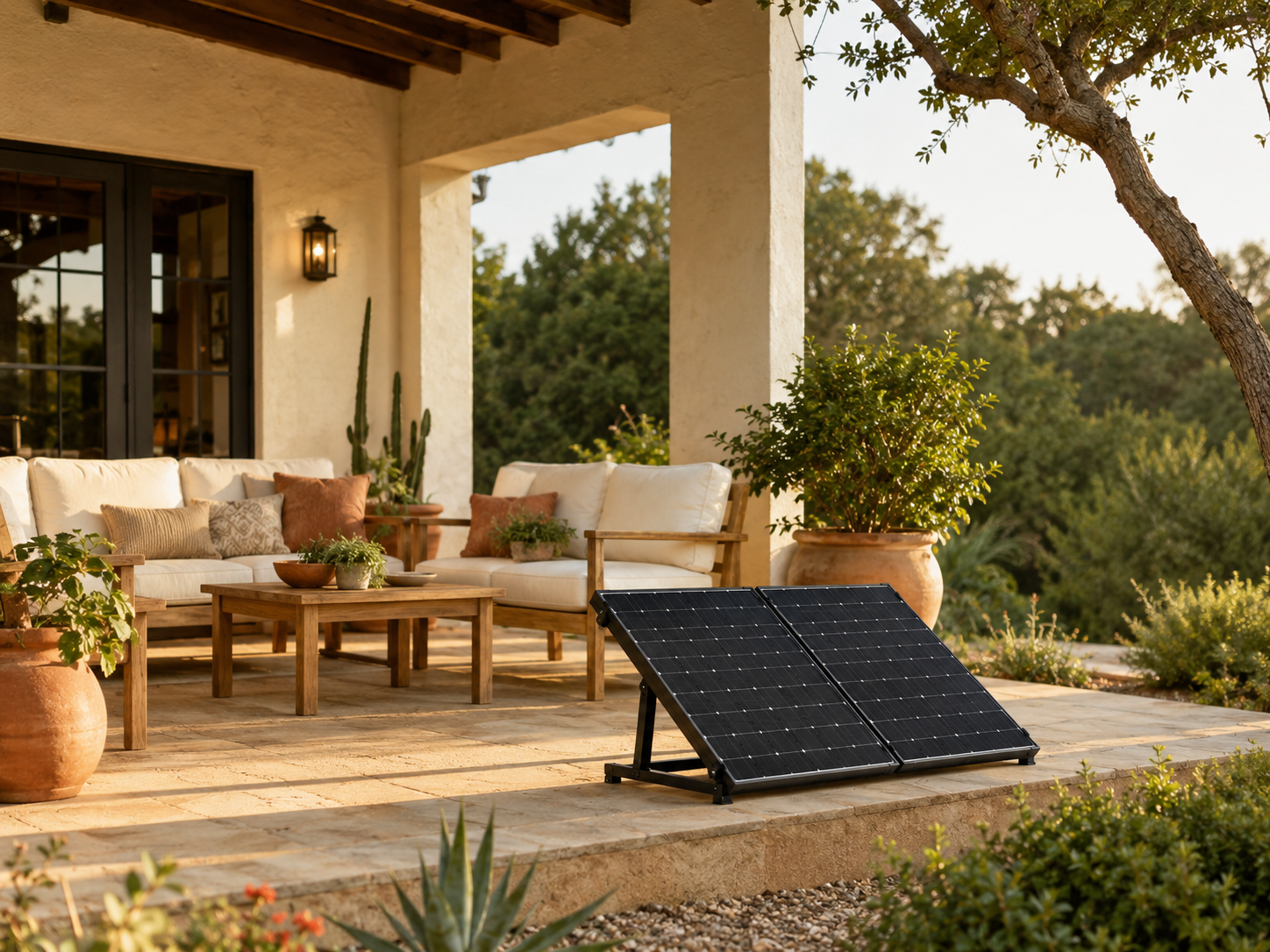
Keep panels close to daily life without turning the home into a construction project.
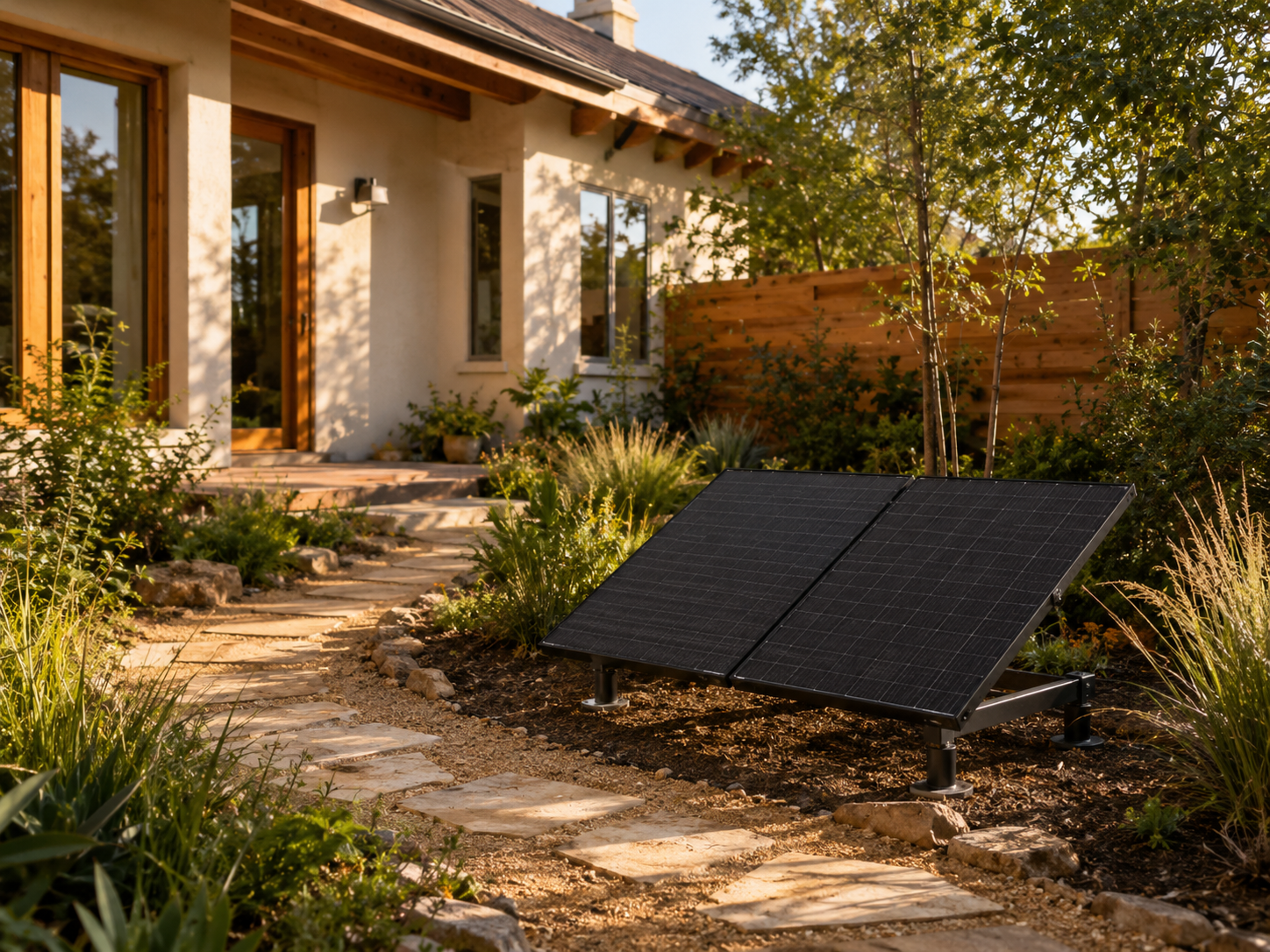
Use a sunny patch of yard with an appropriate, secure mounting system.
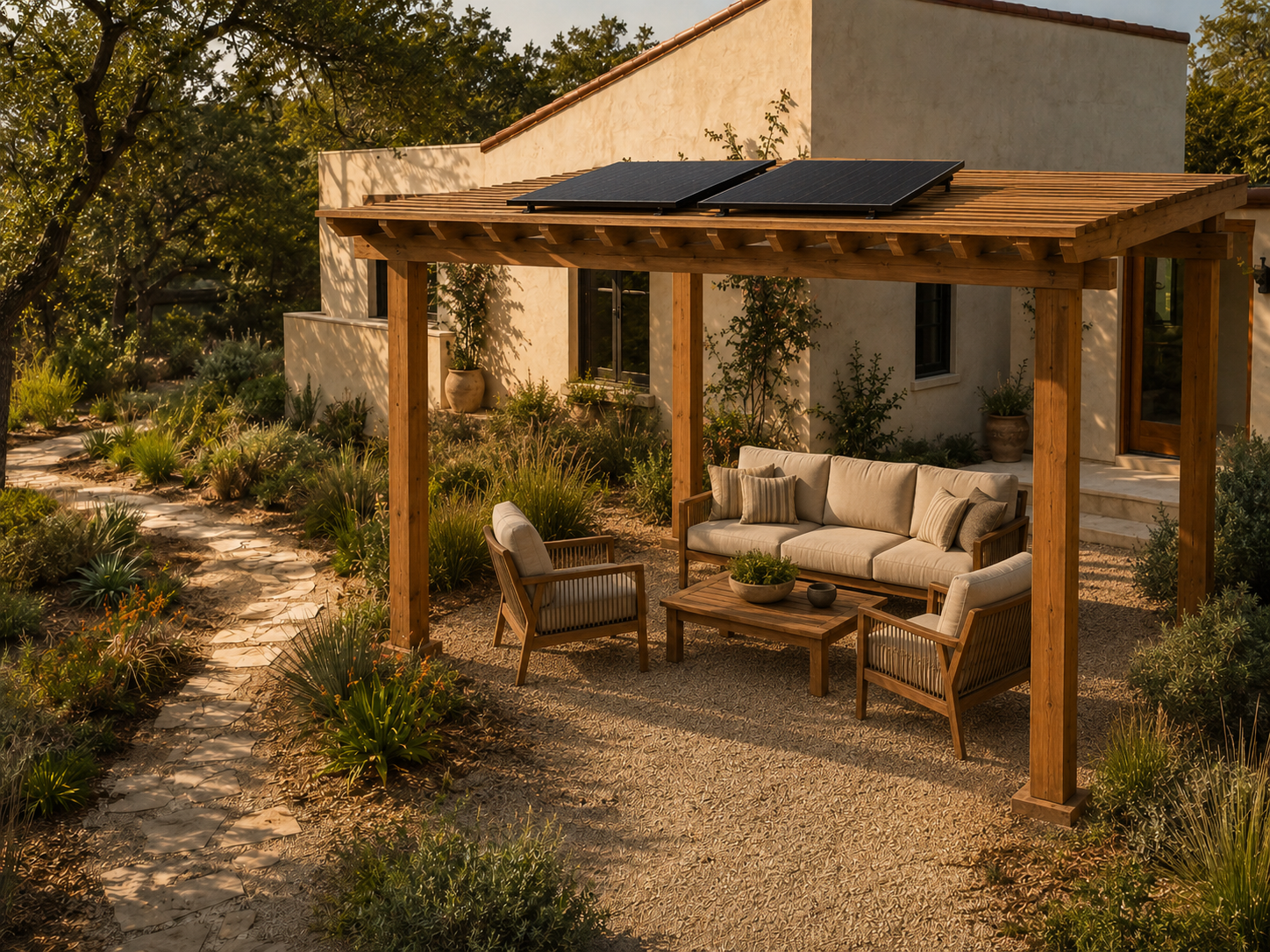
Integrate generation into a useful outdoor structure when the site allows it.
Plug-in solar needs purpose-built equipment and clear rules. A safe product pathway must address shock, fire, wiring, utility-worker, and mounting risks—not merely make connection easy.
Read the technical sourcesAn emerging U.S. safety framework specifically for interactive plug-in photovoltaic equipment and systems.
If utility power goes out, a compliant inverter must stop energizing the home circuit and utility lines.
Some system designs can limit or prevent electricity from flowing back to the grid when policy requires it.
Utah led in 2025. Maine, Virginia, Colorado, Maryland, Vermont, New Hampshire, and Connecticut followed in 2026.
About 30 additional states have introduced or considered similar legislation—evidence that plug-in solar is becoming a national policy question.
Texas has rules for on-site distributed generation, but those rules do not provide a clearly published, appliance-scale plug-in process. This is an educational interpretation, not legal advice.
See the source recordModern safety work is underway. Other states are testing streamlined rules. Texas can protect the grid and line workers while giving consumers another way to lower electricity costs.
“Texas should let consumers safely reduce their own electric bills with certified equipment, without forcing a 400 W appliance-sized system through a process designed for a 10 kW rooftop installation.”Find your Texas legislators
Get occasional, practical updates about Texas rules, safe equipment, and ways to help. No daily newsletter.
The homepage stays simple. These focused guides explain the questions that depend on more context, assumptions, or current rules.
The current Texas framework, what is missing, and what to verify before connecting equipment.
Read guide →02Texas plug-in solar savingsProduction, bill savings, and payback with every assumption stated plainly.
Read guide →03Balcony solar in TexasWhat could work for apartments and condos—and the permissions that still matter.
Read guide →04UL 3700 explainedA plain-English guide to the new safety framework and what certification does not mean.
Read guide →